

When a loved one receives a terminal diagnosis, the question that follows is rarely just medical. It is deeply practical: Who will care for them? Where? And how can we afford it? thats where Palliative care comes in.
Uganda has a palliative care landscape that most families do not know exists; there is a mix of nonprofit organisations, faith-based services, government-supported programmes, and private nursing care. Knowing your options can make an enormous difference, not just financially, but in the quality of life your loved one experiences in their final months.
This guide walks you through the main sources of palliative care support available in Uganda today — starting with free and subsidised services, and then introducing the option of professional private nursing care at home.
What Is Palliative Care and Why Does It Matter?
Palliative care is specialised support for people living with life-limiting or terminal illness. It is not about giving up on treatment. It is about making every remaining day as comfortable, dignified, and meaningful as possible, managing pain, supporting the family, and ensuring your loved one is never alone in their suffering.
In Uganda, palliative care is a more developed field than many people realise. Uganda is consistently recognised as one of the leading countries in Africa for palliative care access, largely because of pioneering work done by nonprofit organisations over the past three decades. However, access remains uneven, and many families in Kampala and other urban areas are unaware of what is available to them.
Free and Subsidised Palliative Care Services in Uganda
1. Hospice Africa Uganda (HAU)
Based in: Makindye, Kampala (with additional sites in Mbarara and Hoima) Website: hospice-africa.org

Hospice Africa Uganda is the most established palliative care organisation in the country. Founded in 1993, HAU has provided care to over 37,000 patients across its three sites over thirty years. Services are provided at the outpatient clinic, through home-based care visits, and via outreach sites across Uganda.
HAU takes a holistic approach to managing physical pain (including through oral liquid morphine, which HAU manufactures under a Ministry of Health licence), alongside spiritual, psychological, and bereavement support for families.
For families in Kampala, the Makindye site is the primary point of contact. HAU services are heavily subsidised and accessible to patients regardless of ability to pay.
Best for: Families in or near Kampala, Mbarara, or Hoima; patients with cancer or end-stage illness needing pain management and holistic support.
2. Palliative Care Association of Uganda (PCAU)
Based in: Kitende, Entebbe Road, Kampala Contact: +256 392 080 713 Website: pcauganda.org
PCAU is the national coordinating body for palliative care in Uganda. It brings together healthcare providers, hospices, and government stakeholders to advocate for and expand palliative care access across all 112 districts. PCAU runs the annual Uganda Conference on Cancer and Palliative Care and is the key national voice on palliative policy.
Families can contact PCAU to be guided toward the most appropriate palliative care provider in their area. PCAU does not provide direct clinical care but serves as an essential referral and coordination hub, particularly useful for families outside Kampala who are looking for services closer to home.
Best for: Finding palliative care providers in specific regions of Uganda; understanding what support is available in your district.

3. Kitovu Mobile (Masaka Region)
Based in: Masaka City, Greater Masaka Website: kitovumobile.org
Kitovu Mobile is a faith-based organisation that has operated since 1987, originally responding to the HIV/AIDS crisis in Rakai district. Today, it provides cancer prevention, palliative care, and home-based care services across nine districts in the Greater Masaka region, serving a population of approximately 1.5 million.
Kitovu Mobile’s palliative care model is built around home visits, bringing care directly to patients rather than requiring families to transport seriously ill loved ones to a facility. For families in the Masaka area, this is a critically important free service.
Best for: Families in Greater Masaka and surrounding districts; patients with cancer or HIV/AIDS needing home-based palliative support.
4. Kawempe Home Care (KHC)
Based in: Kawempe, Kampala
Kawempe Home Care provides community-based palliative care services in the northern suburbs of Kampala, with a focus on home visits for patients with cancer and other life-limiting illnesses. KHC is one of the few palliative providers with meaningful locally generated funding, which contributes to its operational stability.
Families in Kawempe, Bwaise, and surrounding areas of northern Kampala may find Kawempe Home Care the most accessible free home-based option.
Best for: Families in northern Kampala suburbs needing home-based palliative visits.
5. Rays of Hope Hospice (Jinja)
Based in: Jinja City
For families in the Jinja region and eastern Uganda, Rays of Hope Hospice provides palliative care services with support from the District Health Office. The hospice has operated for many years and serves patients with cancer and other terminal diagnoses in the eastern region.
Best for: Families in Jinja and eastern Uganda.
6. Uganda Cancer Institute (UCI) — Palliative Care Unit
Based in: Mulago Hill, Kampala, Website: uci.or.ug
The Uganda Cancer Institute, located at Mulago National Referral Hospital, has a dedicated palliative care unit for cancer patients. UCI emphasises that palliative care should begin at diagnosis — not only at end of life — and supports patients through treatment and recovery as well as end-of-life stages.
For families whose loved one is receiving cancer treatment at Mulago or UCI, the palliative care team there is an important and accessible resource.
Best for: Cancer patients receiving treatment at Mulago or UCI; families wanting palliative care integrated with active cancer treatment.
7. Kabale Christian Care (South Western Uganda)
Based in: Kabale Website: kabalechristiancare.org
Kabale Christian Care is the first nonprofit organisation to provide free palliative care services in South Western Uganda. In a region where access to specialist care is limited, KCC provides palliative nursing support, cancer treatment assistance, counselling, and bereavement support — all at no cost to families.
Best for: Families in Kabale, Kisoro, and South Western Uganda.
RELATED: Patient Care Services
The Gap That Free Services Cannot Always Fill
These organisations do extraordinary work — and Uganda is fortunate to have them. But there are real gaps that families encounter when relying solely on free palliative services:
- Reach: Most free services cover specific districts or regions. Families in central Kampala or peri-urban areas may fall between service zones.
- Frequency: Home visits from nonprofit providers may be weekly or fortnightly, not daily. For patients in active decline, this may not be enough.
- Dedicated attention: Nonprofit teams often carry large caseloads. A dedicated nurse assigned solely to your loved one’s care is a different experience.
- Coordination and continuity: Free services may change personnel frequently. Families often want the same nurse, who knows their loved one’s condition and history, to return consistently.
- Flexibility: Scheduling a visit on short notice, getting same-day support, or having a nurse available on weekends can be difficult through public and nonprofit providers.
When a family needs more — more presence, more consistency, more flexibility private home nursing is where to turn.
Palliative Nursing Care in Kampala — Teheca
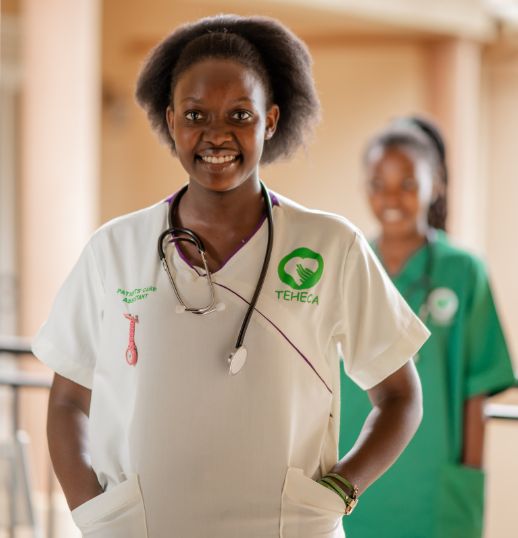
For families who want professional, dedicated nursing care in the comfort of home, Teheca (Tender Hearts Care) has been supporting families across Uganda since 2015.
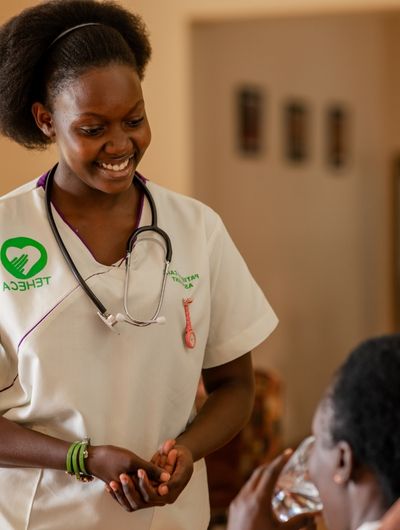
Teheca is not a hospice. We are a home nursing company — which means we send a qualified, vetted nurse directly to your home, on your schedule, to care for your loved one. Our palliative nurses provide:
- Pain and symptom management — working with your doctor to keep your loved one comfortable
- Personal care — bathing, grooming, skin care, oral hygiene — maintaining dignity at every moment
- Medication administration — accurately and on schedule, including authorised pain relief
- Emotional and psychological support — for your loved one and for your family
- Family guidance — honest conversations about what to expect at each stage
- Coordination with your medical team — so nothing falls through the cracks
RELATED: How to Care for a Loved One Without Disrupting Our Daily Routines
A Final Word
Palliative care is not about giving up. It is about choosing dignity, comfort, and love over unnecessary suffering. Uganda has more palliative care resources than most families realise — and reaching out, even when it feels too hard, is always the right first step.
If you are not sure where to start, call us. We will listen to your situation, point you toward the right resources, whether that is Teheca or another organisation and make sure your family does not face this alone.
Teheca — A Caring Hand (0200) 902-468 | info@teheca.com | Kampala, Uganda
👉 Visit our palliative care page


Leave a Reply